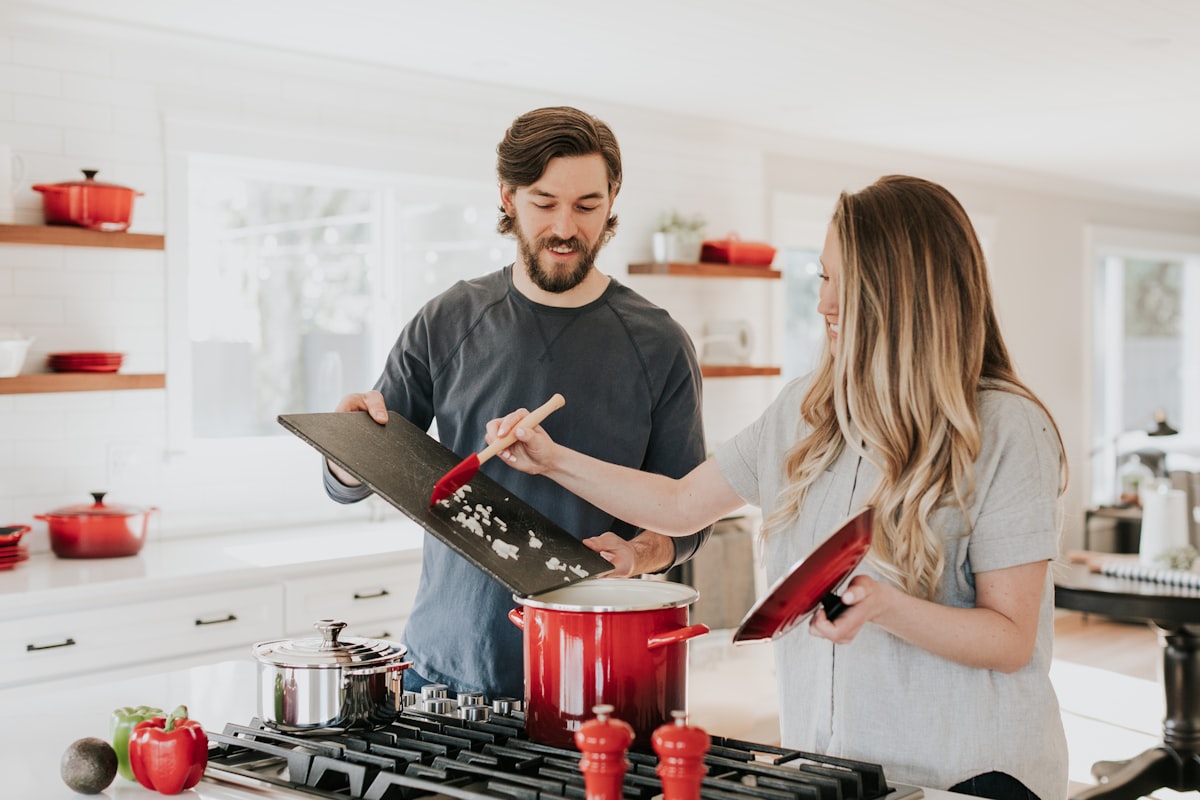
There's a version of fitness content where a person measures every gram onto a pristine plate and their family cheerfully accepts individual bento boxes. That's lovely television. It is not most evenings. If you cook dinner for a family, you already know the real problem: the dish is one big pot, and "a serving" is whoever gets to the table first with the biggest spoon.
So let's skip the fantasy. Here's how to actually track calories and macros for family meals without turning dinner into a spreadsheet session or becoming the least-popular person at the table.
Start before you cook, not after
The single biggest mistake is trying to log after the meal. By then the pot's been scraped, seconds were had, and nobody can honestly reconstruct what went in. The only reliable number comes from ingredients, and ingredients are only on the counter before they meet the heat.
So the rule is: log the whole recipe once, up front. Weigh (or roughly estimate) the protein, the grain, the oil, the sauces as you add them. That one honest pass gives you the total calories and macros for the entire pot. From there, every portion is division.
A 3-step method that doesn't fall apart
Step 1: log the full recipe once
Add the whole dish to your tracker as a single entry. Oil, butter, the spoon of sugar in the sauce. All of it. This is the part people skip, and it's the part that matters. A "healthy" stir-fry becomes not-so-healthy purely because of two tablespoons of oil you never counted.
Step 2: divide by servings
Decide how many servings the pot makes and divvy the total. If you'd rather be precise, weigh the whole cooked dish and weigh your portion, then take the same fraction of the totals. You don't need a scale to weigh everything forever; you need it for this one evening to calibrate your eye.
Step 3: keep a running note of your favorite dishes
You make the same twelve dinners on rotation. The first time, log it properly. Every time after that, you're copying a number you already trust instead of rebuilding it. This is the difference between logging that takes ninety seconds and logging that takes nine minutes.
Splitting one pot between different goals
Dividing by servings assumes everyone eats the same amount. In most families nobody does. One person trying to lose weight and another who lifts four days a week can share one pan of chili and need very different bowls of it.
The fair split goes by daily target. If each person eats about the same share of their day at dinner, the person with the bigger target takes the bigger share of the pot. Find your pair of targets below.
| Daily targets | Bigger share | Smaller share | From a 1,500 cal pot |
|---|---|---|---|
| 3,000 and 2,000 | 60% | 40% | 900 and 600 |
| 2,800 and 2,000 | 58% | 42% | 875 and 625 |
| 2,600 and 1,900 | 58% | 42% | 865 and 635 |
| 2,400 and 1,800 | 57% | 43% | 855 and 645 |
| 2,200 and 1,700 | 56% | 44% | 845 and 655 |
| 2,000 and 1,600 | 56% | 44% | 835 and 665 |
| 2,000 and 2,000 | 50% | 50% | 750 and 750 |
Assumes each person eats the same fraction of their daily calories at dinner. Round to the nearest spoonful. Get each target from the free calorie calculator.
For three or more people, add up everyone's daily targets and divide each person's target by that total. Targets of 1,700, 2,400 and 2,900 calories add up to 7,000, so the shares come out to about 24%, 34% and 41% of the pot.
This is where an app earns its keep
All of the above works on paper, but let's be real about the friction. Manually typing "chicken, rice, oil, broccoli, 4 servings" for a whole recipe is exactly the kind of chore that makes people quit logging by Thursday.
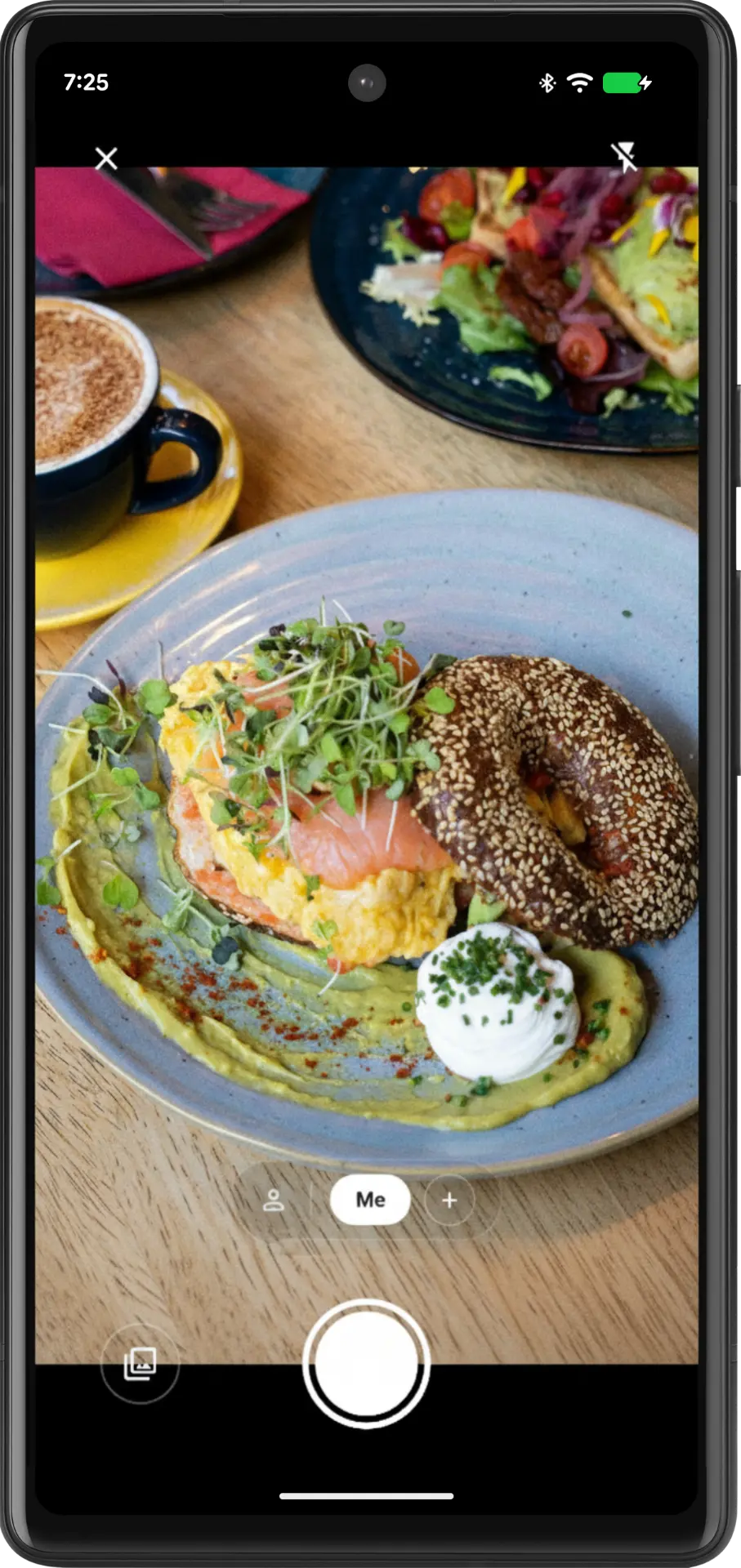
That's the whole reason Wellew is built around snapping a photo of the meal. When dinner is on the table and the kids are hungry, taking a photo is something you'd do anyway, and the logging happens around it.
With a Family plan (you plus up to three people, $21.49 a month), you pick everyone who ate before you take the photo. The meal lands in each person's diary and counts against their own goals, and each person can nudge their own portion afterwards. Nobody keeps a separate ledger for the same dinner. Here's how the Family plan works.
A few honest shots of the same weekly rotation, and you've quietly built the recipe library that "log it once, reuse it forever" promises.
Portion-guess wrong? Good. That's the point.
Don't aim for perfect on night one. If the first attempt is off by 100 calories, you've learned what that pot really holds. Research on dietary self-monitoring keeps coming back to the same finding: the people who keep logging, however imperfectly, are the ones who get results (1, 2). The perfect is the enemy of the consistent.
So the actual goal here isn't a flawless calorie ledger. It's a habit that survives Tuesday. Log the pot once, divide by servings, reuse your favorites, and let the photo do the heavy lifting when 6pm rolls around. Your family does the eating. You just stop guessing.
Common questions
How do you count calories for a family meal?
Log the whole recipe once, before or while you cook, then divide the total by the number of servings. If people eat different amounts, split the pot by each person's daily calorie target instead of by equal servings.
How do you split calories when two people eat the same meal?
Divide each person's daily calorie target by the two targets added together. That fraction is their share of the pot. Targets of 2,400 and 1,800 calories split about 57% and 43%.
Can one person log dinner for everyone?
In Wellew, yes. On a Partner or Family plan, you choose who ate the meal before you take the photo. It lands in each person's diary and counts against their own goals, and each person can adjust their own portion afterwards.
References
- Burke LE, Wang J, Sevick MA. "Self-Monitoring in Weight Loss: A Systematic Review of the Literature." Journal of the American Dietetic Association, 2011. doi:10.1016/j.jada.2010.10.008
- Semper HM, et al. "Frequency of Self-Monitoring and Its Association With Weight Loss." Obesity, 2016. doi:10.1111/obr.12428