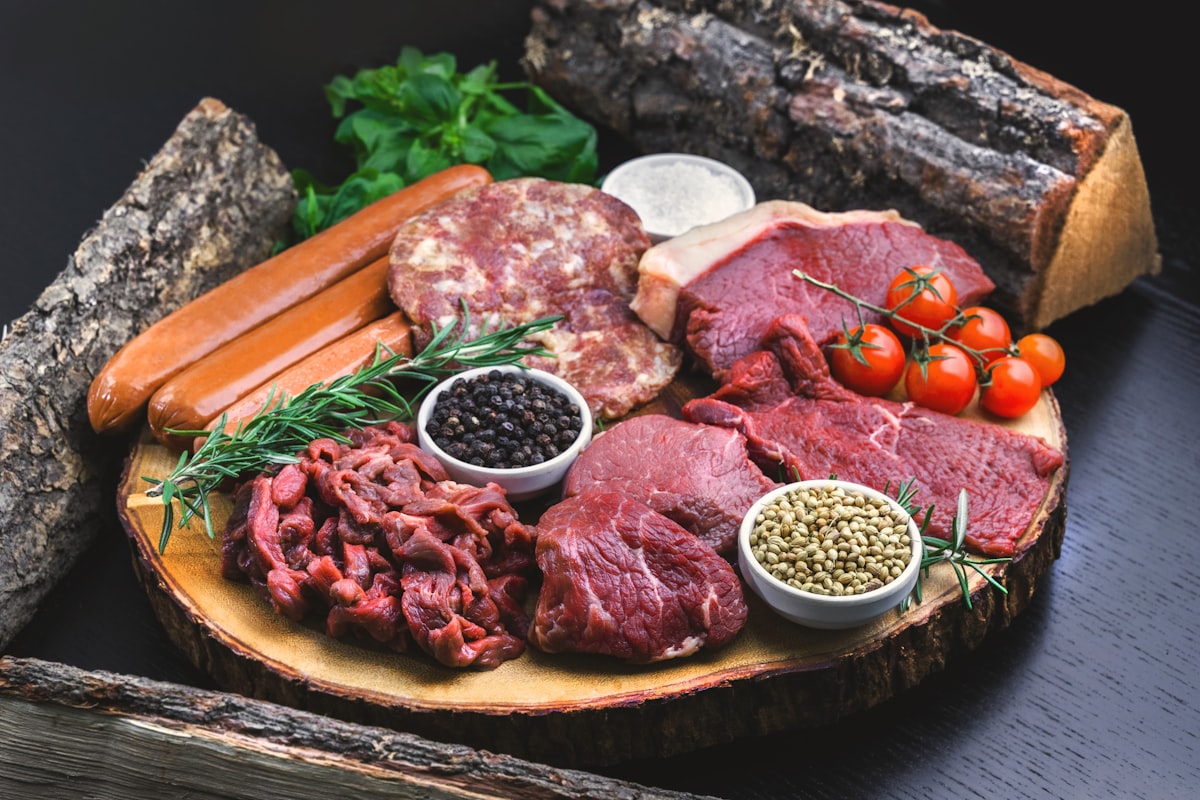
If you've spent any time in fitness content, you've seen the protein contradictions. One voice says you're on the edge of losing muscle unless you eat 200 grams a day. Another says high protein will quietly damage your kidneys. Neither gives you a number you can use.
Here's the useful part up front. If you're trying to lose fat or keep muscle, the usual mistake is eating too little protein, not too much. And protein is the macro with the clearest payoff when you're trying to lose fat, keep muscle or just stay full until dinner.
The short answer
- Bare minimum: 0.8 g per kg of body weight (0.36 g per lb). This is the RDA, set to prevent deficiency (1).
- Most adults: 1.2 to 1.6 g per kg (about 0.55 to 0.75 g per lb). This is the range in the 2025–2030 Dietary Guidelines for Americans (2).
- Lifting weights or losing weight: 1.6 to 2.2 g per kg (about 0.75 to 1 g per lb) (3).
Want your exact number? The protein calculator takes about 30 seconds.
Protein per day by body weight
Find the row closest to your weight, then pick the column that matches how you live. The middle column is the right answer for most people.
Protein per day by body weight
| Body weight | Minimum0.8 g/kg | Most adults1.2–1.6 g/kg | Lifting or cutting1.6–2.2 g/kg |
|---|---|---|---|
| 120 lb54 kg | 44 g | 65–87 g | 87–120 g |
| 140 lb64 kg | 51 g | 76–102 g | 102–140 g |
| 160 lb73 kg | 58 g | 87–116 g | 116–160 g |
| 180 lb82 kg | 65 g | 98–131 g | 131–180 g |
| 200 lb91 kg | 73 g | 109–145 g | 145–200 g |
| 220 lb100 kg | 80 g | 120–160 g | 160–220 g |
| 250 lb113 kg | 91 g | 136–181 g | 181–249 g |
Why the RDA isn't your target
The 0.8 g/kg figure in older guidelines and textbooks is a floor. It's the amount that keeps almost everyone from becoming deficient (1). It was never meant to be the amount that keeps you full, helps you hold on to muscle while you lose weight or helps you recover from training.
That's why the newest US Dietary Guidelines, released in January 2026, moved the everyday target up to 1.2 to 1.6 g/kg and tell people to put protein at every meal (2). For a 160-pound person, that's the difference between 58 grams a day and somewhere around 87 to 116.
Which column is yours?
You're mostly sitting, and your weight is steady
Aim for the low end of the middle column, around 1.2 g/kg. You'll clear the minimum with room to spare and stay fuller between meals.
You're trying to lose weight
Go higher. When you eat fewer calories, your body will happily burn muscle along with fat. Extra protein limits that. In a meta-analysis of weight-loss trials, people on higher-protein diets lost slightly more fat and kept more of their muscle than people on standard-protein diets with the same calories (4). Protein is also the most filling macro, and your body burns more calories digesting it than it does fat or carbs (5). That makes a calorie deficit easier to stick with. Aim for 1.6 g/kg or more. If you haven't set your deficit yet, start with the calorie deficit calculator, and read how big a calorie deficit should be before you pick a number.
You lift weights or train hard
Use the right column. A large meta-analysis of strength-training studies found that muscle gains kept improving up to about 1.6 g/kg a day, with the upper end of the benefit around 2.2 g/kg (3). The International Society of Sports Nutrition lands in the same place, at 1.4 to 2.0 g/kg for most people who exercise (6). That's where the gym rule of "a gram per pound" comes from. It's the top of the useful range, not the minimum. If you are training while dieting, the how-to is in building muscle in a calorie deficit.
You're over 65
Muscle gets harder to keep as you age, and your body responds less to each meal's protein. Experts on aging recommend at least 1.0 to 1.2 g/kg for healthy older adults and 1.2 g/kg or more for those who stay active (7). Spreading it evenly across meals matters more here than at any other age.
You're pregnant or breastfeeding
Needs go up to about 1.1 g/kg in the second half of pregnancy and 1.3 g/kg while breastfeeding (1). Your doctor or midwife may adjust that for you.
You have a lot of weight to lose
Grams-per-kilogram targets were built around people of average body fat. If you weigh 280 pounds, multiplying by 1.6 g/kg gives you more than 200 grams, which is more than you need and hard to eat. A simple fix is to use your goal weight, or a weight you'd be happy at, in the table above.
You have kidney disease
Skip the table and follow your doctor's target. Kidney disease is the one common case where less protein is usually the advice.
How much protein per meal
The daily total is what matters most. How you split it still helps. Studies point to about 0.4 g/kg per meal across at least four meals as a good way to reach 1.6 g/kg (8). In practice, that's roughly 25 to 40 grams at each meal for most adults.
You may have heard that your body can only "absorb" 20 or 30 grams at a time and wastes the rest. That isn't right. In a 2023 study, people who drank 100 grams of protein after a workout kept building muscle from it for over 12 hours, longer than people who drank 25 grams (9). A big protein dinner isn't wasted. It's just harder to reach your total if dinner is the only meal doing the work. The full dose response data is in how much protein you can absorb per meal.
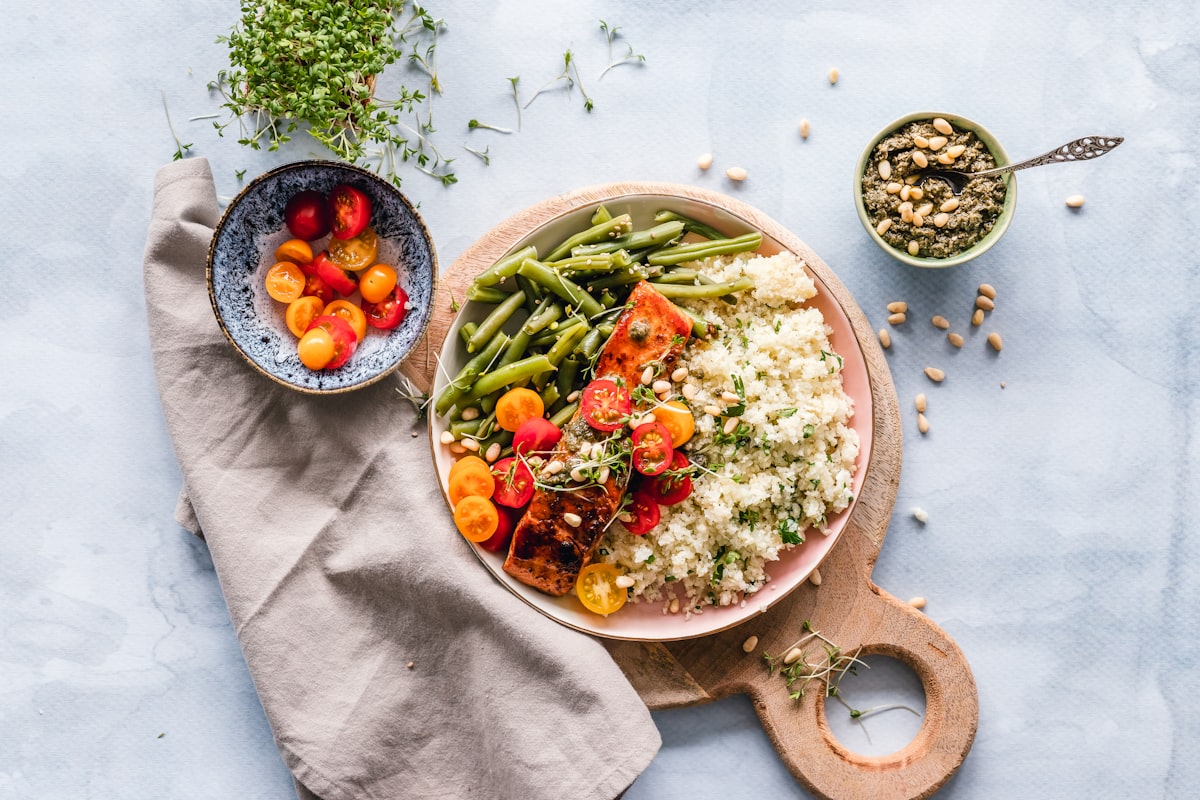
So the practical move is boring and effective: get a real source of protein at every meal, not just dinner. A palm-sized portion of cooked chicken, fish or lean meat (about 4 oz) is roughly 25 to 35 grams. For tofu, beans or Greek yogurt, go a bit bigger.
How much protein is in common foods
The last column is the one most charts leave out. It shows how much protein you get for every 100 calories, which is what matters when you're also watching calories. Peanut butter has protein, but it's mostly a fat.
Protein in 17 common foods
| Food | Protein | Calories | Protein per 100 cal |
|---|---|---|---|
| Shrimp, cooked, 3 oz | 20 g | 85 | 24 g |
| Tuna, canned in water, 3 oz | 20 g | 100 | 20 g |
| Whey protein, 1 scoop | 24 g | 120 | 20 g |
| Chicken breast, cooked, 4 oz | 35 g | 187 | 19 g |
| Greek yogurt, plain nonfat, ¾ cup | 17 g | 100 | 17 g |
| Cottage cheese, 2%, ½ cup | 12 g | 90 | 13 g |
| Lean ground beef (90/10), cooked, 4 oz | 30 g | 245 | 12 g |
| Firm tofu, ½ cup | 20 g | 180 | 11 g |
| Salmon, cooked, 4 oz | 25 g | 230 | 11 g |
| Tempeh, 3 oz | 17 g | 165 | 10 g |
| Edamame, shelled, 1 cup | 18 g | 190 | 9 g |
| Eggs, 2 large | 13 g | 143 | 9 g |
| Lentils, cooked, 1 cup | 18 g | 230 | 8 g |
| Black beans, cooked, 1 cup | 15 g | 227 | 7 g |
| Milk, 2%, 1 cup | 8 g | 122 | 7 g |
| Almonds, 1 oz | 6 g | 164 | 4 g |
| Peanut butter, 2 tbsp | 7 g | 190 | 4 g |
What 120 grams looks like in a day
Here's a normal day for a 160-pound person aiming for the top of the "most adults" range. No shakes, no chicken-and-rice in a plastic box.
- Breakfast: two eggs, a slice of whole-wheat toast and ¾ cup of Greek yogurt with berries. About 34 g.
- Lunch: a grain bowl with 4 oz of chicken and ½ cup of quinoa. About 39 g.
- Snack: ½ cup of cottage cheese with fruit. About 12 g.
- Dinner: 4 oz of salmon with rice and broccoli. About 33 g.
That adds up to about 118 grams. Notice that no single meal is heroic. Each one just has a real protein source in it.
Plant-based? You can still get there
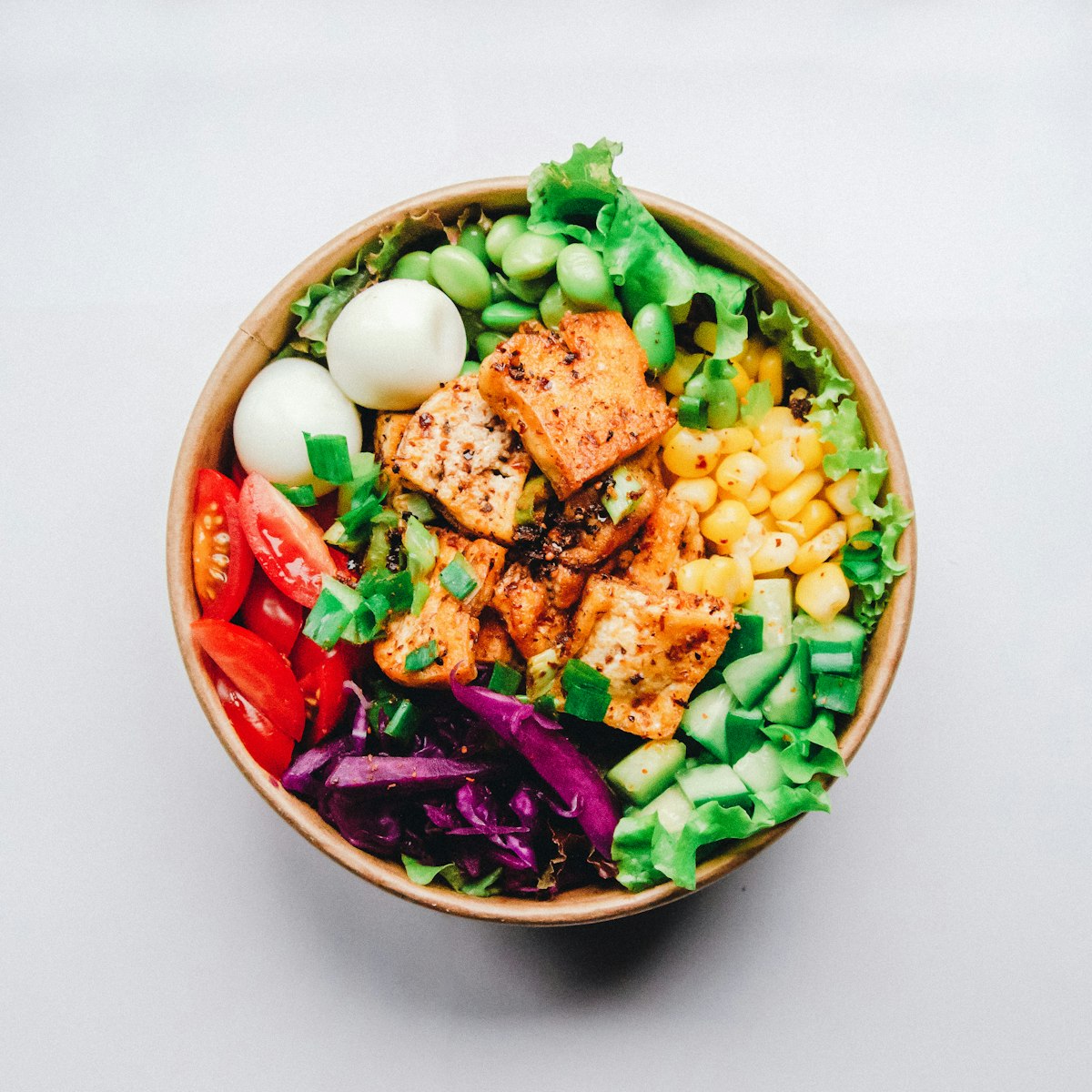
Plant proteins work for building and keeping muscle when your total intake is high enough (6). The two things to watch are variety and calories. Mixing sources like soy, lentils, beans, grains and seeds covers all the amino acids you need. And because beans and lentils come with carbs, they cost more calories per gram of protein than tofu, tempeh or seitan. If you're in a deficit, lean on those.
Can you eat too much protein?
For healthy adults, it's hard to do. A 2018 meta-analysis compared higher-protein diets with normal ones and found no meaningful difference in kidney function (10). The more realistic downside is that going well past 2.2 g/kg doesn't build any extra muscle (3), and it can crowd out the foods that bring fiber. If your plate is all meat and shakes, read how much fiber you need next. Protein and fiber together are what keep you full on fewer calories.
Hit it without a binder of meal plans
Knowing your number is the easy part. Hitting it on a Thursday when you're tired is where it falls apart. Research on self-monitoring keeps finding the same thing: people who log what they eat do better, not because logging is magic, but because it keeps the goal in front of them (11).
That's what Wellew is for. Snap a photo of your meal and it estimates the protein, along with calories, carbs and fat. Your protein ring shows how close you are to your goal, so by mid-afternoon you know whether dinner needs to do extra work. If you're unsure how close a photo estimate gets, we looked at how accurate photo calorie counting is.
A palm of protein at every meal, tracked honestly. That's most of the strategy.
Questions
How much protein do I need per day?
Most adults do well on 1.2 to 1.6 g per kg of body weight, or about 0.55 to 0.75 g per pound. The minimum is 0.8 g/kg. If you lift or are losing weight, aim for 1.6 to 2.2 g/kg.
How much protein do I need to lose weight?
At least 1.2 to 1.6 g/kg, and up to 2.2 g/kg if you also strength train. If you have a lot of weight to lose, use your goal weight in the math.
Is 1 gram of protein per pound too much?
No. It's about 2.2 g/kg, the top of the useful range for building muscle. It's safe for healthy people, but most get nearly all of the benefit around 0.7 g per pound.
How much protein can your body absorb at once?
There's no hard limit of 20 or 30 grams. Larger servings are used too, just over a longer stretch. Splitting protein across three or four meals is still the easiest way to reach your total.
Is a high-protein diet bad for your kidneys?
Not in healthy people. If you have kidney disease, follow your doctor's protein target instead.
See your protein without the math
Free on Android with 3 photo scans a day, a free barcode scanner and no ads. The iPhone app is almost here.
Get it on Google PlayJoin the iPhone waitlistReferences
- Institute of Medicine. Dietary Reference Intakes for Energy, Carbohydrate, Fiber, Fat, Fatty Acids, Cholesterol, Protein, and Amino Acids. National Academies Press, 2005. doi:10.17226/10490
- U.S. Department of Agriculture and U.S. Department of Health and Human Services. Dietary Guidelines for Americans, 2025–2030. January 2026. realfood.gov
- Morton RW, et al. "A systematic review, meta-analysis and meta-regression of the effect of protein supplementation on resistance training-induced gains in muscle mass and strength in healthy adults." British Journal of Sports Medicine, 2018. doi:10.1136/bjsports-2017-097608
- Wycherley TP, et al. "Effects of energy-restricted high-protein, low-fat compared with standard-protein, low-fat diets: a meta-analysis of randomized controlled trials." American Journal of Clinical Nutrition, 2012. doi:10.3945/ajcn.112.044321
- Leidy HJ, et al. "The role of protein in weight loss and maintenance." American Journal of Clinical Nutrition, 2015. doi:10.3945/ajcn.114.084038
- Jäger R, et al. "International Society of Sports Nutrition Position Stand: protein and exercise." Journal of the International Society of Sports Nutrition, 2017. doi:10.1186/s12970-017-0177-8
- Bauer J, et al. "Evidence-based recommendations for optimal dietary protein intake in older people: a position paper from the PROT-AGE Study Group." Journal of the American Medical Directors Association, 2013. doi:10.1016/j.jamda.2013.05.021
- Schoenfeld BJ, Aragon AA. "How much protein can the body use in a single meal for muscle-building? Implications for daily protein distribution." Journal of the International Society of Sports Nutrition, 2018. doi:10.1186/s12970-018-0215-1
- Trommelen J, et al. "The anabolic response to protein ingestion during recovery from exercise has no upper limit in magnitude and duration in vivo in humans." Cell Reports Medicine, 2023. PMC10772463
- Devries MC, et al. "Changes in kidney function do not differ between healthy adults consuming higher- compared with lower- or normal-protein diets: a systematic review and meta-analysis." Journal of Nutrition, 2018. doi:10.1093/jn/nxy197
- Burke LE, Wang J, Sevick MA. "Self-Monitoring in Weight Loss: A Systematic Review of the Literature." Journal of the American Dietetic Association, 2011. doi:10.1016/j.jada.2010.10.008
- U.S. Department of Agriculture, Agricultural Research Service. FoodData Central. fdc.nal.usda.gov